Handmade kitchen knives are shaped, ground and finished by a bladesmith, not stamped out by machine. A handmade chef knife has a better edge, a handle that fits your hand and a character a factory knife cannot copy. This guide explains what handmade and hand forged really mean, the best-known makers, every kitchen knife type and what it is used for, chef knife vs santoku, Japanese vs German knives, Damascus and carbon steel, handles and care. It also shows shops, restaurants and brands how to order custom or wholesale kitchen knives directly from the makers.
What Makes a Kitchen Knife Handmade?
A handmade kitchen knife is forged or ground and finished by hand. The maker chooses the steel, heat-treats the blade, grinds the edge, fits the handle and polishes the knife. A mass-produced knife is cut from sheet steel by machine and finished on a production line.
- Better edge and balance. A hand-ground blade can be thinner behind the edge, and the weight is set by hand.
- Custom fit. You can choose the blade shape, length, handle material and colour.
- One of a kind. Damascus patterns, wood grain and horn are different on every knife.
- Repairable and long-lived. With care a handmade knife can last for decades and be resharpened many times.
Hand Forged vs Stock Removal
Both methods make handmade knives. A hand forged kitchen knife is heated and hammered into shape, which refines the steel and gives the maker control over the blade profile. A stock removal knife is ground out of a flat bar of steel. Forging is slower and adds character, such as hammered finishes and Damascus patterns. Good stock removal knives can be just as sharp. Judge a knife by the maker, the steel and the heat treatment, not by the word "forged" alone.
Best Handmade Kitchen Knives: Makers and Styles to Know
These makers and lines are often named in best-of lists for handmade or hand-finished kitchen knives. Check each maker's own page for where and how the knife is made, because "handmade" is used loosely.
- Bob Kramer. An American master bladesmith known for hand-forged carbon steel and Damascus chef knives. His designs are also made in production lines with Zwilling, including a carbon steel range made in Solingen, Germany.
- Shun. A Japanese maker known for razor-sharp blades with a Damascus-clad finish and comfortable handles.
- Masamoto. A Tokyo maker of traditional knives, including the KS series chef's knife in high-carbon steel, known for balance and a fine edge.
- Kikuichi. A Japanese maker with a long history, known for Damascus-clad (warikomi) knives such as the gyuto.
- Independent bladesmiths. Small workshops, including makers in Wazirabad, Pakistan, hand-forge Damascus and carbon steel chef knives, cleavers and sets, with custom handles and at much lower prices. See the section on ordering below.
Types of Kitchen Knives and What They Are Used For
Knowing the kitchen knife types helps you buy only the knives you will use. Most cooks do almost everything with three: a chef's knife, a paring knife and a bread knife.
Chef's Knife
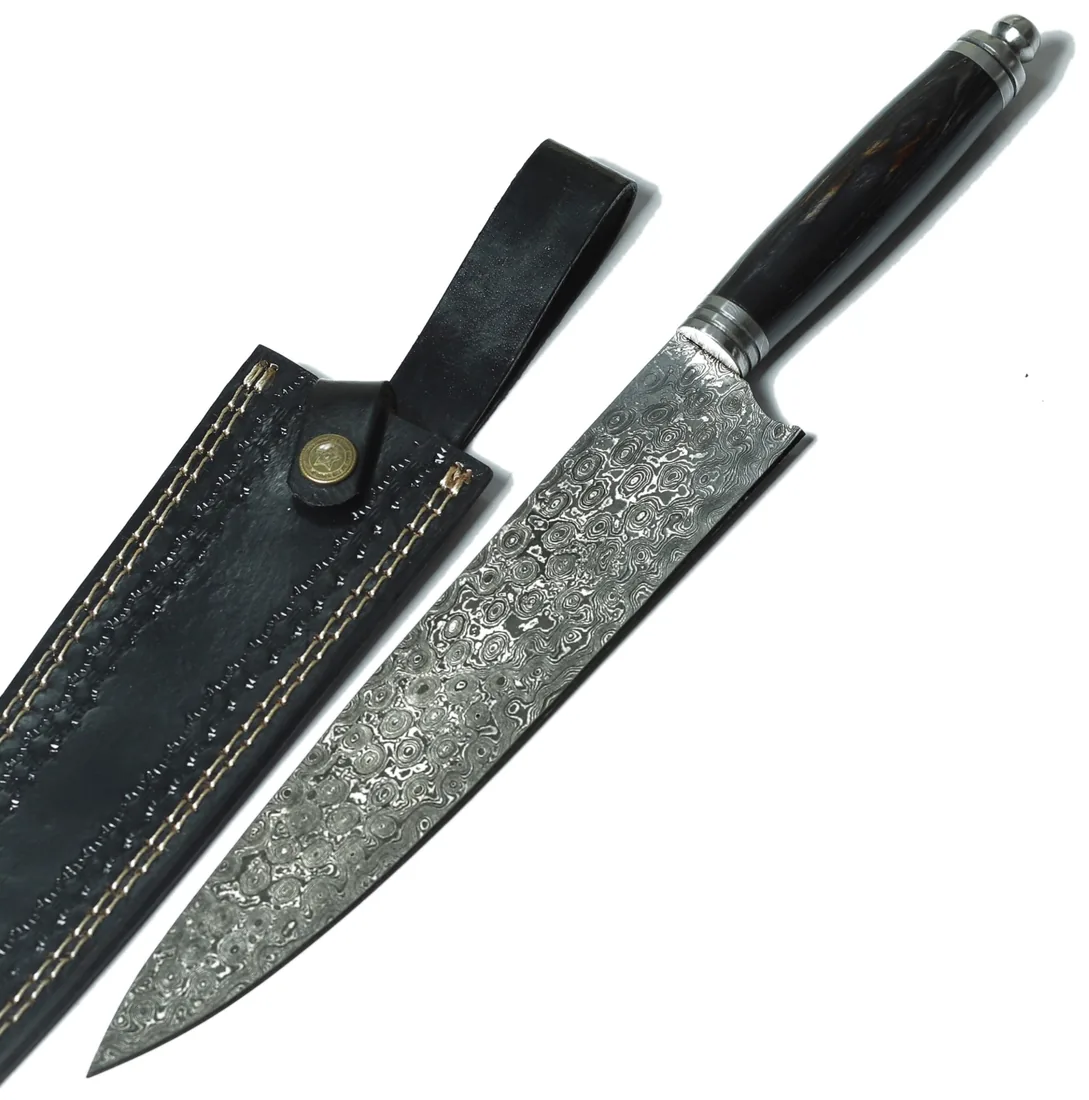
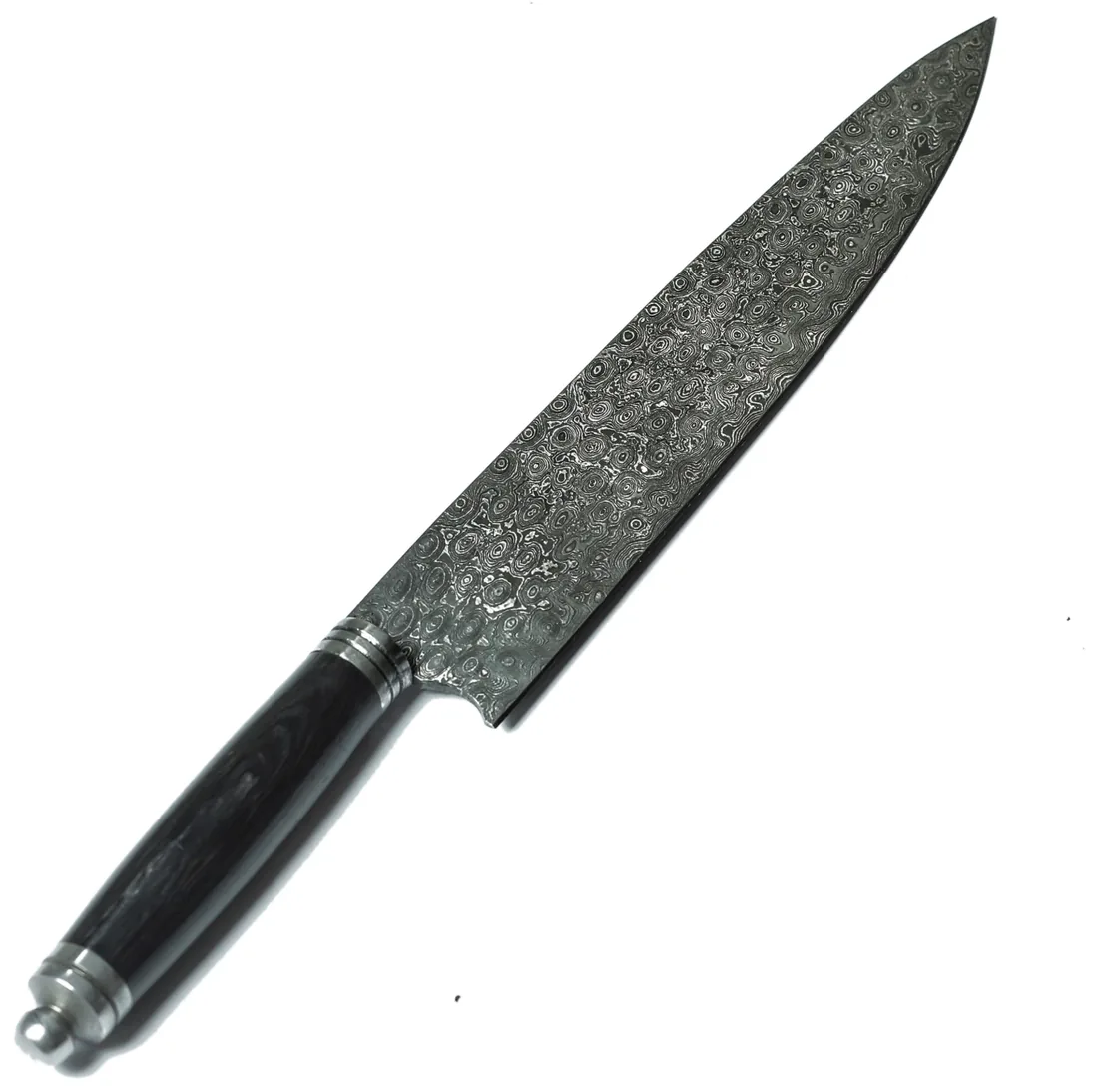
The most versatile knife in the kitchen, and the one to buy first. The broad blade curves up to the tip, which suits chopping, slicing, dicing and mincing vegetables, meat and herbs, with a rocking motion. Blades are usually 8 to 10 inches, and 6 to 12 inches is the full range. A handmade chef knife is the best upgrade a home cook can make.
Santoku Knife
A Japanese all-purpose knife. The name means "three virtues" for slicing, dicing and chopping meat, fish and vegetables. The blade is usually 5 to 7 inches, flatter than a chef's knife, with a rounded tip, and some have hollow dimples that help food release. It is used with an up-and-down chop, not a rock.
Cleaver
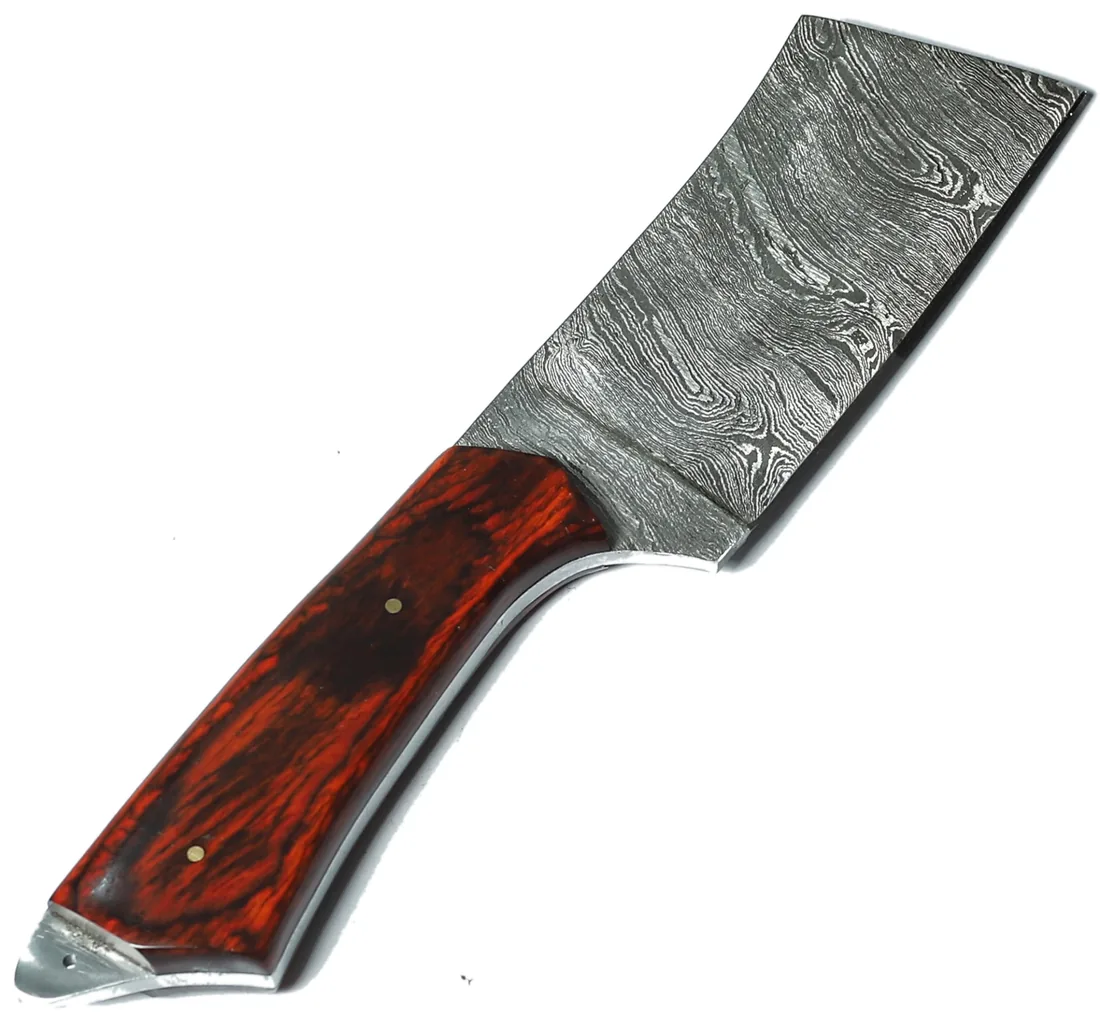
A heavy rectangular blade. A meat cleaver is thick and heavy, and is used for chopping through bone, joints and tough cuts. A Chinese vegetable cleaver is thin and light and is an all-purpose knife for slicing, chopping and scooping. Another cleaver-style knife is the Serbian chef knife, a wide, heavy blade with a pointed tip, traditional in the Balkans and used for meat and general prep.
Paring Knife
A small pointed knife with a blade of about 3 to 4 inches. A paring knife is used for peeling, trimming and precise work: hulling strawberries, deveining shrimp, segmenting citrus, coring tomatoes and mincing a shallot or garlic clove in the hand.
Bread Knife
A long serrated blade, usually 8 to 10 inches, that cuts through a hard crust without crushing the soft crumb. It is the best knife for sourdough, baguettes and cakes. Use long, light sawing strokes and let the teeth do the work. A bread lame or scoring blade is a different tool, used to slash dough before baking.
Utility Knife
A medium knife with a narrow blade of 4 to 7 inches, between a paring knife and a chef's knife. A utility knife is used for smaller fruits and vegetables, sandwiches, cheese and light carving.
Boning Knife
A narrow blade of about 5 to 7 inches, either stiff or flexible. A boning knife separates meat from the bone, trims fat and silver skin and breaks down poultry.
Fillet Knife
A long, thin, flexible blade of 6 to 11 inches for filleting and skinning fish. Hand-forged carbon steel fillet knives are popular, but stainless steel resists rust better near water.
Chef Knife vs Santoku vs Nakiri vs Gyuto
These four are often compared. Here is how they differ.
- Chef's knife (Western). Longer, with a curved belly, which suits the rocking cut. Usually heavier, and good for meat and everything else.
- Santoku vs chef knife. A santoku is shorter, lighter and flatter, with a rounded tip, so it suits straight chopping and slicing, and feels easier for smaller hands. A chef's knife is longer and more curved, so it suits rocking and heavier jobs. If you cook mostly vegetables, try a santoku. If you carve and break down meat, choose a chef's knife.
- Nakiri vs chef knife. A nakiri is a rectangular vegetable knife with a straight edge and square tip. It chops with a clean push, and cannot rock. It is excellent for vegetables and poor for meat.
- Gyuto vs chef knife. A gyuto is the Japanese chef's knife. It has the same use, but is usually thinner and lighter, with a harder steel and a finer edge.
- Cleaver vs chef knife. A cleaver is for heavy chopping and bone work. A chef's knife is for precision slicing and dicing.
Japanese Kitchen Knife Types
A Japanese chef knife is usually thinner and harder than a Western knife, and each Japanese kitchen knife shape has a job.
- Gyuto. The Japanese chef's knife, for chopping, slicing and dicing.
- Santoku. An all-purpose knife for meat, fish and vegetables.
- Nakiri. A vegetable knife with a straight edge and a square tip.
- Usuba. A thin vegetable knife used for very fine cuts and garnishes.
- Yanagiba. A long, thin slicing knife for raw fish and sushi.
- Deba. A heavy, thick-spined knife for filleting and breaking down fish.
Japanese vs German Chef Knives
This is the classic choice when buying a chef knife. In general, and with exceptions:
- Japanese knives use harder steel, are thinner and lighter, and have a more acute edge, so they cut with less effort and hold an edge longer. The harder steel can chip if you twist the blade or hit bone.
- German knives use slightly softer, tougher steel, are heavier, with a more curved belly and often a bolster. They are more forgiving and good for heavy jobs, and need honing more often.
If you prefer precision and light weight, choose Japanese. If you prefer a sturdy all-rounder, choose German. A handmade knife lets you pick the best of both, such as a Japanese profile with a tougher, easy-to-maintain edge.
Damascus, Carbon and Stainless Steel
The steel decides how the knife cuts and how much care it needs. Ask the maker which steel is used and how the blade is hardened.
Steel | Strengths | Care |
|---|---|---|
Damascus | Layered, forge-welded steel with a wavy or ringed pattern. Many hand-forged Damascus blades use carbon steels such as 1095 and 15N20. Holds a good edge and looks distinctive. | Dry and oil like carbon steel. |
Carbon steel | Takes a very sharp edge and is easy to resharpen. Forged carbon steel often has a black or hammered finish. | Can rust and stain. Dry after use and oil lightly. |
Stainless steel | Resists rust and needs the least care. A good choice for busy kitchens. | Wash and dry. Hone regularly. |
Damascus Chef Knives and Kitchen Knife Sets
A Damascus chef knife is the most popular handmade kitchen knife, and a Damascus kitchen knife set makes a striking gift or restaurant set. Quality varies a lot between makers, so judge by the maker, the steel and the heat treatment, not just the pattern. Be careful with very cheap "Damascus" knives that have an etched or printed pattern and no real layers.
Handle Materials
- Wood. Walnut, rosewood and olive wood give a warm grip and a natural grain. Keep wood away from soaking and dishwashers.
- Stabilised and dyed wood. Wood treated with resin and coloured, which resists moisture and comes in many colours.
- Horn and bone. A natural, traditional look. No two pieces are alike, and some countries restrict importing animal materials.
- Micarta and resin. Synthetic, hard-wearing and consistent, a good choice for heavy use.
Black and Hammered Kitchen Knives
There are two kinds of black kitchen knife. Some are stainless steel with a black coating, which looks sleek but can wear off with use and abrasive cleaners. Others are hand-forged carbon steel with a black forged finish and a hammered texture, which also helps food release from the blade. Either way, wash by hand and avoid scourers.
Kitchen Knife Sets: What to Look For
A chef knife set or knife block set saves money, but only if you will use every knife. Most cooks need three: a chef's knife, a paring knife and a bread knife. Add a utility or santoku knife and a boning knife if you cook a lot of meat.
- Check each knife, not the count. Five good knives are better than fifteen weak ones.
- Match the steel and handle. A matched set looks better and feels consistent.
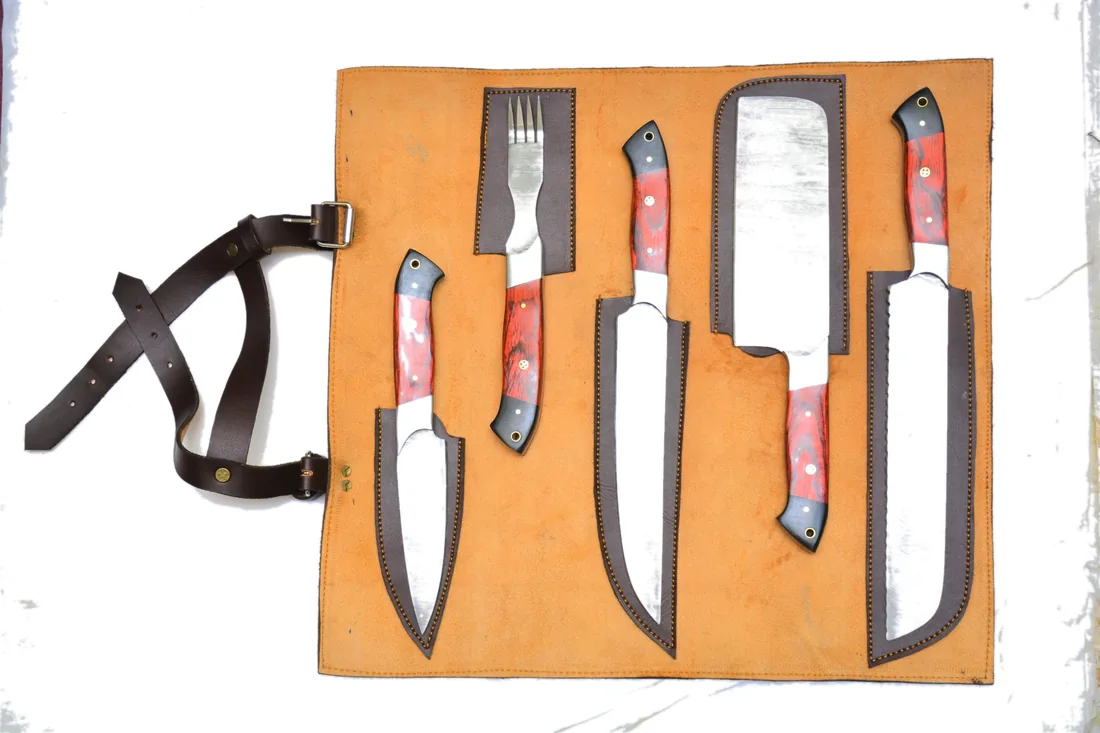
- Choose the storage. A wooden block takes counter space. A leather knife roll protects the edges and is good for travel and chefs.
How to Choose a Handmade Kitchen Knife
- Blade length. 8 inches suits most home cooks, 10 inches suits larger hands and heavy prep.
- Balance and weight. Hold the knife with a pinch grip at the blade. It should feel balanced, not tip heavy.
- Handle fit. The handle should fill your hand without rubbing. Handmade knives let you choose the shape and material.
- Full tang. The steel should run through the handle for strength.
- Steel and heat treatment. Ask the maker which steel is used and how it is hardened. A good blade is hard enough to hold an edge but not brittle.
- Your care habits. If you will not dry and oil a knife, choose stainless steel.
How to Care for Handmade Kitchen Knives
- Wash by hand with mild soap and dry straight away. Never use a dishwasher.
- Oil carbon steel and Damascus blades lightly if you will not use them for a while.
- Cut on wood or soft plastic boards, not glass, stone or ceramic.
- Hone often with a honing steel to keep the edge straight, and sharpen on a whetstone when it dulls.
- Store in a knife roll, block or sheath, so the edge is not knocked against other knives.
Custom Kitchen Knives and Custom Chef Knives
A custom knife is made to your specification. You can choose the blade shape and length, the steel, the handle material and colour, the guard or bolster, the engraving and the sheath or roll. Custom chef knives are popular as gifts, for restaurants, and for brands that want their own knife.
- Send a drawing, photos or a reference knife, with the steel and handle you want.
- Approve a sample before the full order, and agree what difference between pieces is acceptable.
- Ask the maker for the steel, the hardness, the minimum order and the lead time in writing.
Order Handmade or Wholesale Kitchen Knives
If you run a shop, restaurant, hotel or brand, you can order handmade kitchen knives in bulk, without a middleman. Makers in our network in Wazirabad, a Punjab city known for cutlery, produce Damascus and hand-forged carbon steel chef knives, cleavers, santoku knives and matched sets, with your choice of handle, a leather knife roll and your logo. Send your quantity and destination, and approve a sample before the full order.
- Custom knife manufacturer: your design, logo and handle
- Wholesale cutlery and kitchenware
- Damascus knives wholesale guide
- Browse kitchen knives on Baramdat
- Cutlery set manufacturers in Wazirabad
- Copper Damascus knife guide
The Bottom Line
Choose a handmade kitchen knife for its edge, balance and a handle that fits your hand, and pick the steel by how much care you are willing to give it. Start with a chef's knife, add a paring knife and a bread knife, and decide between Japanese precision and German toughness. For a business, ordering custom handmade knives straight from the makers gives you your own design and a better price per knife.